
How to Make Cannabutter: The Complete Guide to Perfect Cannabis Butter
Weed Wissen
- Quick start: cannabis butter in 4 steps
- Choosing the right cannabis - quality decides
- Decarboxylation - the most important step
- Making cannabutter - detailed instructions
- Calculating dosage & potency
- Quality control & troubleshooting
- Versatile uses - from sweet to savoury
- Storage & shelf life - pro tips
- Legal situation - what you need to know
- Summary - your path to perfect cannabutter
- FAQ - frequently asked questions
- Download - free PDF recipe
Related products
Quick start: cannabis butter in 4 steps
No time to lose? Here's the process boiled down to the absolute minimum. This gets you a quick result without getting lost in the details.
The basic recipe at a glance
- Decarboxylate (approx. 40 min): your ground cannabis goes into the preheated oven at 115 °C. This step is non-negotiable, because it activates the THC.
- Melt (approx. 5 min): melt butter and water together in a pot over low heat. The water acts as a shield against burning.
- Simmer (approx. 3 hrs): add the activated cannabis to the liquid butter-and-water mixture. The whole thing now has to simmer gently for at least three hours, never coming to a boil.
- Strain (approx. 15 min): the finished liquid butter is filtered through a fine sieve or a cheesecloth to remove all the plant matter. After that, just let it cool and set in the fridge.
Ingredient list & amount calculator table
This table is your visual calculator, practical, clear and simple. The potency is calculated for cannabis with an assumed THC content of 15 %, a common average value.
| Potency level | Cannabis amount (for 250 g butter) | Estimated THC per teaspoon (5 g) | Effect profile |
|---|---|---|---|
| Mild | 3 grams | approx. 9 mg | A gentle start, ideal for beginners & microdosing |
| Medium | 7 grams | approx. 21 mg | Clearly noticeable, a good standard dose for experienced users |
| Strong | 12 grams | approx. 36 mg | Very potent, only for experienced consumers with a high tolerance |
💡 Nice to know: the water in the mixture has two crucial jobs. First, it regulates the temperature and stops the butter from burning on the bottom of the pot. Second, it binds water-soluble substances like chlorophyll that you don't want in your butter. As it cools, the fat and water then separate cleanly again, an ingeniously simple trick for a purer end product.
Choosing the right cannabis - quality decides
The best recipe is useless if the main ingredient is poor. The cannabis you choose lays the foundation for potency and flavour.
Which cannabis strains work best?
The effect of your edibles is largely determined by the genetics of the strain you use.
- Indica strains tend to produce a deep, physical relaxation. Perfect for switching off after a long day.
- Sativa strains often bring on a cerebral, energetic and creative high. A good choice for social occasions.
- Beyond THC: THC content isn't everything. The terpene profile shapes the flavour and can modulate the effect. A certain amount of CBD can soften the psychoactive effects.
Quality criteria: how to spot good cannabis
Before you start, take 30 seconds for a quality check:
- Dryness: the flower must be dry. If the little stems snap with an audible crack when you bend them, the drying is perfect.
- Colour & smell: a vibrant green colour and an intense, aromatic smell are signs of freshness. A hay-like smell is a clear warning sign.
- Mould check: ⚠️ examine the flower, including inside, for white, cobweb-like threads. If you find mould, the material is unusable and must be discarded without exception.

Decarboxylation - the most important step
This chemical process is the heart of the preparation. Skip it, and your butter will barely have any effect.
Why decarboxylation is essential
In the raw cannabis plant the active compound is present mainly as THCA, a non-psychoactive carboxylic acid. To convert it into active THC, heat has to be applied. This splits off a carbon dioxide molecule (CO₂), a process known as de-carboxylation. For your butter you have to carry out this step deliberately in the oven.
Step-by-step decarboxylation
- Preheat your oven to exactly 110-115 °C (conventional top/bottom heat). An oven thermometer is a worthwhile investment here.
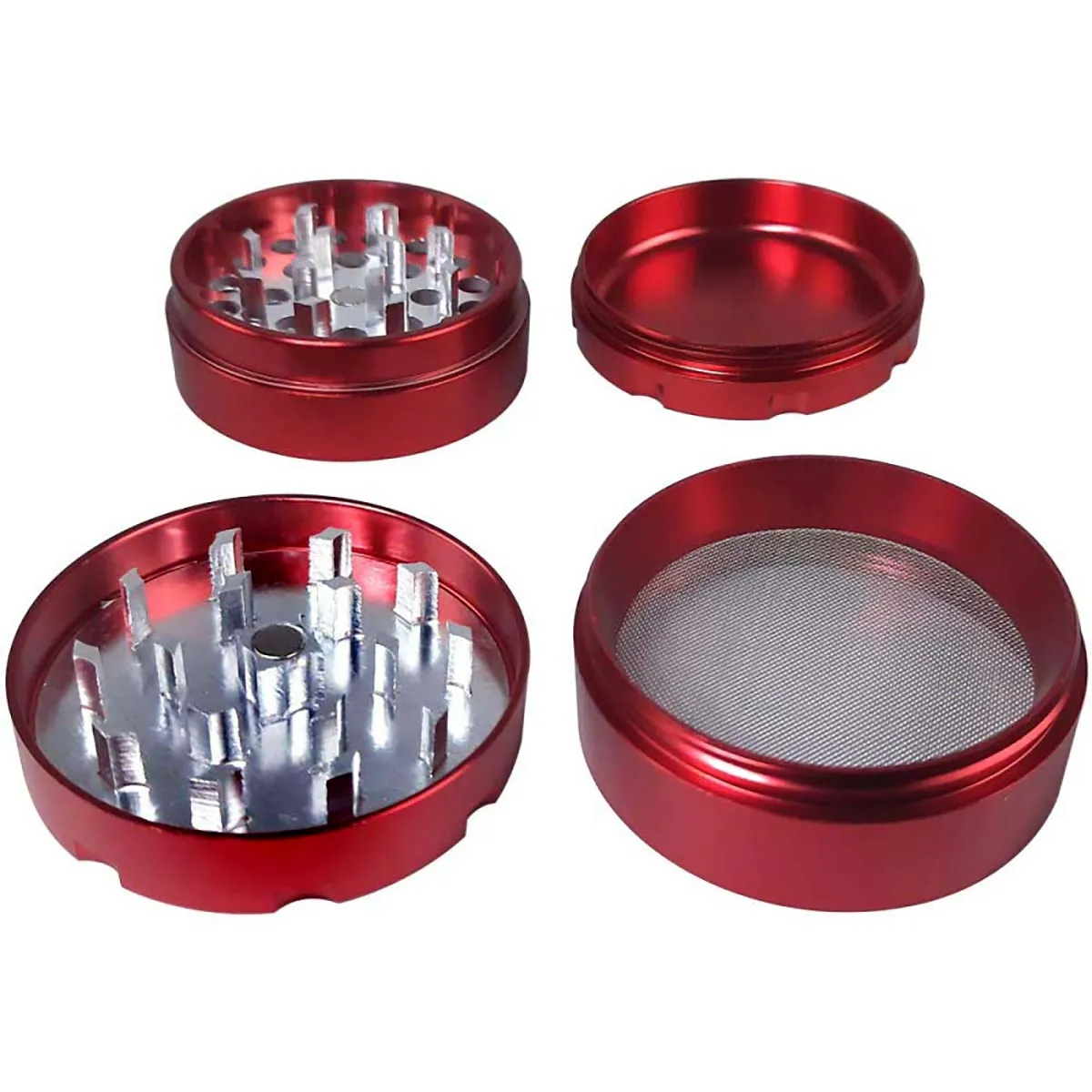
- Break up the cannabis flower with a grinder, not too fine, rather coarse.
- Spread the ground material in a thin, even layer on a baking tray lined with parchment paper.
- Put the tray in the oven for 30 to 40 minutes. You'll know it's done when the colour has shifted from green to a light golden brown.

Troubleshooting: what to do when things go wrong
- Problem: too hot (>120 °C): ❌ you've destroyed valuable cannabinoids. The butter will be weaker.
- Problem: too cold (<100 °C): ❌ the conversion was incomplete. You can continue the process for another 15 minutes.
- Problem: burnt: ❌ unfortunately nothing can be saved here. The active compounds are destroyed.
Making cannabutter - detailed instructions
Now we combine your perfectly prepared cannabis with the butter. Here's the most common method in detail, followed by alternatives.
Classic water-bath method
- Put 250 g of butter and about 1 litre of water into a medium-sized pot.
- Heat everything slowly on a low setting. Once the butter has melted completely, you can add the decarboxylated cannabis.

- Reduce the heat to the absolute lowest setting. The liquid should now simmer gently for at least 3, better 4 hours.
- Prepare a heat-resistant bowl and stretch a fine kitchen sieve or a double-folded cheesecloth over it.
- Carefully pour the hot butter-and-water mixture through the filter. Gently press the plant mass in the sieve with the back of a spoon.

- Cover the bowl and first let it cool to room temperature before putting it in the fridge.
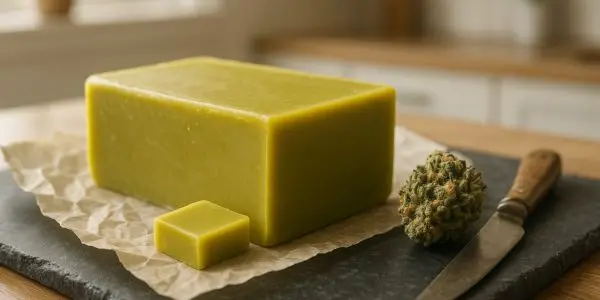
- Once chilled, the cannabutter will have set as a solid, golden-green disc on top of the water. Carefully lift it off and pat it dry.
Alternative methods compared
| Method | Advantages | Disadvantages | Ideal for... |
|---|---|---|---|
| Slow cooker | ✅ Very low odour, no burning | ❌ Longer duration (6-8 hrs) | discreet preparation & convenience. |
| Sous-vide | ✅ Maximum precision, no loss of active compounds | ❌ Requires special equipment | perfectionists & tech lovers. |
| Mason jar | ✅ Low odour, easy handling | ❌ The glass gets very hot, needs a large pot | people making small batches. |
Pro tips for perfect results
- Temperature control is the key: keep the temperature steady between 70 °C and 85 °C.
- Patient stirring: a gentle stir every 30-45 minutes ensures an even extraction.
- Consistency check: good cannabutter should be firm and waxy after cooling.
💡 Tip: to minimise the often "grassy" taste, you can clarify the butter before use (turn it into ghee). This removes the milk protein, resulting in a purer, nuttier flavour.
Calculating dosage & potency
This is the most important section for a safe and pleasant experience. Take your time with it.
Dosage table for every potency level
⚠️ Golden rule: "Start low and go slow." Always begin with a very small dose and wait at least two hours for the full effect before you even think about taking more.
Calculating THC content - simply explained
If you know the THC percentage of your cannabis, you can approximate the total potency with a simple formula: amount of cannabis [g] * 1000 * THC content [%] * 0.9 = total THC [mg]
Microdosing: the gentle start
Microdosing means taking a dose so small that it has no or only a barely perceptible psychoactive effect (usually 2.5-5 mg THC). For that, simply use a knife tip of your mild butter.
💡 In short: correct dosing is the decisive factor for a positive experience. Edibles work differently, more slowly, but often more intensely and much longer. Respect that process. Always test every new batch first with a tiny amount and wait. You can always take more, but you can't undo a dose that's too high.
Quality control & troubleshooting
Once the butter is ready, the final check follows. Here you'll learn to tell good quality from bad and to solve problems.
How do I recognise good cannabutter?
- Colour: an appetising golden green through to a rich amber.
- Consistency: chilled, it should have a firm, even and waxy structure.
- Smell & taste: a nutty, buttery aroma accompanied by a clear cannabis note.
Common problems and solutions
- Problem: "My butter has no effect."
➡️ Solution: almost always it's down to forgotten or incorrectly done decarboxylation. - Problem: "The effect is far too weak."
➡️ Solution: you can carefully melt the finished butter again and simmer it once more with more cannabis. - Problem: "Help, the butter is way too strong!"
➡️ Solution: melt your potent butter and mix it with normal, unsalted butter to halve the concentration. - Problem: "The taste is unpleasant."
➡️ Solution: for the next batch, try the tip about clarifying the butter (ghee).
Versatile uses - from sweet to savoury
Your finished butter is a culinary all-rounder. Here are a few ideas beyond the classic brownie.
Sweet classics reinterpreted
- Space cookies & brownies: the undisputed classic.
- Cannabutter caramel: add a spoonful of cannabutter when making caramel sweets.
- Morning pancakes: a little dab on a stack of warm pancakes.
Savoury surprises
- Garlic herb butter: perfect with baguette, steak or grilled vegetables.
- Elevated pasta sauces: a teaspoon into your finished tomato or cream sauce.
- Roasted nuts & popcorn: the perfect movie snack.

Dosing in recipes - baking safely
⚠️ The most important rule when cooking: always keep an eye on the temperature! THC starts to evaporate at around 157 °C. To avoid destroying the effect of your butter, you should never heat your dishes above 150 °C.
Storage & shelf life - pro tips
With the right storage you preserve the freshness and potency of your precious butter for weeks or even months.
Optimal storage
- Fridge: in an airtight container the butter keeps for about 2-3 weeks.
- Freezer: for long-term storage, freezing is the best method (up to 6 months).
Maximising shelf life
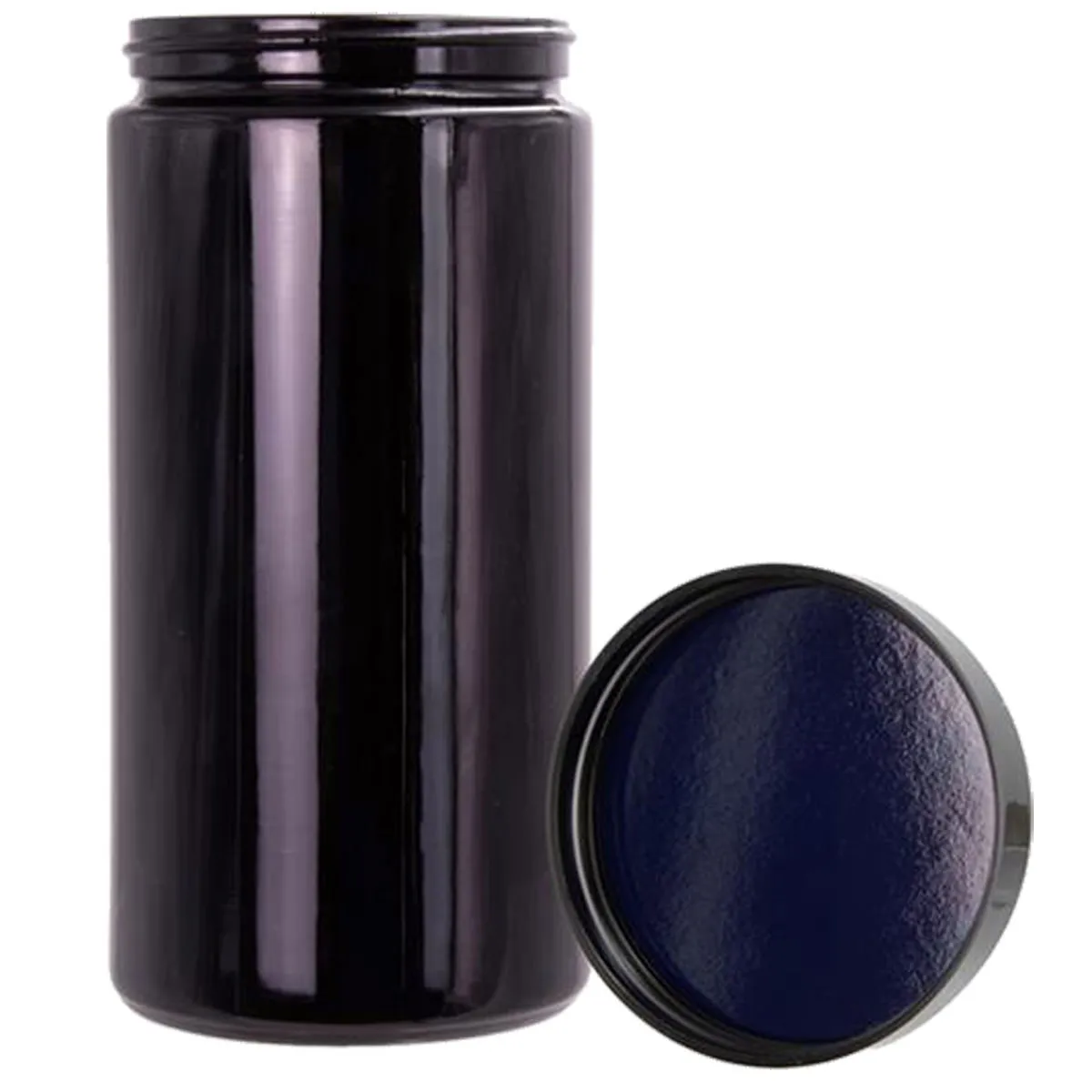
The ultimate pro tip is portioning it in a silicone ice-cube tray. This gives you perfectly dosed cubes that you can take out individually.
💡 Tip: if you own a vacuum sealer, you can vacuum-seal your cannabutter (ideally already frozen). Removing the oxygen almost completely halts the ageing process and maximises shelf life.
Legal situation - what you need to know
Using cannabis products also means understanding the legal framework where you live.
The legal situation differs by country
Cannabis laws vary enormously from country to country. In some places, private cultivation and the possession of certain amounts for personal use have been legalised for adults within clear limits, while in many other countries this remains restricted or illegal. Making cannabis extracts such as cannabutter falls under the respective national cannabis laws. Before you start, always inform yourself about the current rules that apply where you live.
Handling it safely - general tips
- Personal use only: ⚠️ passing on or selling cannabis products is prohibited in most places, regardless of the local legal situation.
- Discretion is a matter of honour: aim for discreet preparation to avoid bothering others with the smell.
- Safe storage: ⚠️ your cannabutter must always be clearly labelled and kept absolutely out of reach of children and pets.
Summary - your path to perfect cannabutter
You've almost made it. If you internalise these three points, nothing stands in the way of your perfect cannabutter:
- Decarboxylation is a must: no heat, no effect. 115 °C for 40 minutes is your mantra.
- Temperature is king: keep the heat low while simmering and below 85 °C.
- Dosing is respect: always start with a minimal dose and wait at least two hours.
FAQ - frequently asked questions
Can I use CBD cannabis for the recipe too?
Yes, absolutely. The process is exactly the same. You'll then get a relaxing but non-psychoactive CBD butter.
How can I effectively neutralise the cannabis taste?
The most effective method is "water curing". Place your unground flower in distilled water for 2-3 days (change it daily). This rinses out much of the chlorophyll. Afterwards, dry the flower thoroughly.
Does the recipe also work with trim?
Yes, it does. Bear in mind, though, that trim has a much lower potency than the flower. So you'll need a considerably larger amount.
Why do edibles feel so much stronger than smoking?
When you eat cannabis, your liver metabolises the THC into 11-hydroxy-THC. This compound is significantly more potent, which leads to a more intense and longer-lasting experience.
My butter won't separate properly from the water, what can I do?
Put the bowl in the fridge for an extra hour or carefully into the freezer for 15-20 minutes. The additional cold should let the butter set completely.
Download - free PDF recipe
Your complete cannabutter recipe to print out
All the steps, the ingredient list and the handy dosage table, compact in one PDF. Perfect for your kitchen and always within reach.
Disclaimer
The content presented on our website serves exclusively for neutral information and general education. It does not constitute a recommendation or promotion of the diagnostic methods, treatments or medications described or mentioned. The texts make no claim to completeness, nor can the timeliness, accuracy and balance of the information provided be guaranteed. The texts are in no way a substitute for professional advice from a doctor or pharmacist and must not be used as a basis for independent diagnosis or for beginning, changing or ending treatment of illnesses. If you have health questions or complaints, always consult a doctor you trust. We and our authors accept no liability for inconvenience or damage resulting from the use of the information presented here. This content is aimed exclusively at adults (18+) and does not constitute any encouragement to consume cannabis or other substances.