
What Is a Grinder? All About the Legendary Herb Grinders
Weed Wissen
Du liebst deine Kräuter, aber das Zerkleinern von Hand ist... naja, sagen wir mal suboptimal? Klebrige Finger, ungleichmäßige Brösel, die im Joint seltsam abbrennen oder im Vaporizer nicht richtig dampfen? Kennen wir. Genau hier kommt ein kleines, aber mächtiges Werkzeug ins Spiel, das in keiner gut sortierten Ausrüstung fehlen sollte: der Grinder.
What Is a Grinder? All About the Legendary Herb Grinders
You love your herb, but breaking it up by hand is... well, let's say suboptimal? Sticky fingers, uneven bits that burn oddly in a joint or won't vape properly? We know the feeling. This is exactly where a small but mighty tool comes in, one that shouldn't be missing from any well-stocked kit: the grinder.
You may have heard the terms before, grinder, crusher, herb grinder, but you're wondering: what exactly is a grinder? And more importantly: do I really need one? Spoiler: if you care about getting the best out of your herb, the answer is very probably yes. In this guide we go deep: what the term actually means, why grinding brings so many benefits, how the device works and how to use it properly to get the most out of your material. Forget the fiddly mess, discover the art of the perfect grind.
Quick answer: what is a grinder, really?
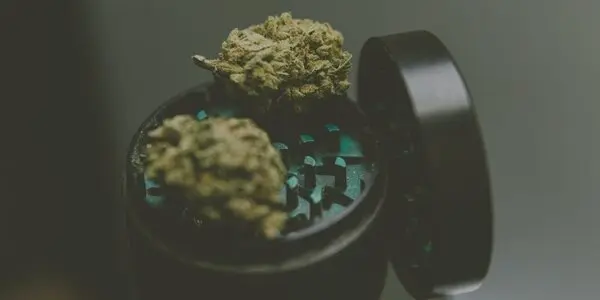
At heart, a grinder, also called a crusher or herb grinder, is a tool designed specifically to break down dried plant matter, above all cannabis flower but other herbs too, quickly, cleanly and efficiently into small, even particles.
Think of it as a small, handy mill that usually consists of two or more parts and has sharp teeth or pegs inside. A simple twisting motion lets these teeth grind the plant material to a consistency that's ideal for whatever comes next, be it a joint, blunt, vaporizer or pipe.
But a grinder's value goes beyond just shredding. It's a key tool for consistency and efficiency, helping you prepare your material optimally and ultimately get more out of it. It turns chunky buds into a homogeneous mass that's not only easier to work with but can also release its active compounds more effectively.
💡 In short: a grinder (or crusher) is your tool for breaking weed or other herbs down cleanly and evenly. That improves consistency, handling and helps you tap the full potential of your material.
Forget scissors & fingers: why grinding with a grinder really pays off
Sure, you could cut your buds with scissors or crumble them between your fingers. But let's be honest: that's often a sticky, uneven affair. A grinder offers decisive advantages that make the whole process far easier:
- ✅ Even burn/vapour & better flavour: evenly ground material burns or vaporizes far more uniformly. No "hotspots" that burn too fast, no uneven draw. The result? A smoother pull, and the fine aromas of your herb come through much better. The larger surface area also means the compounds are released more efficiently.
- ✅ More efficient effect from your herb: thanks to the even grind and increased surface area, the active compounds (such as cannabinoids and terpenes) can be extracted more fully when heated. So you use your material more efficiently and get the most out of its potency.
- ✅ Collecting kief, the potent extra: many 4-piece grinders have a fine screen. As you grind, the tiny, resinous trichomes (often wrongly called "pollen"), which are especially rich in active compounds, fall through this screen and collect as kief in the bottom chamber (the kief catcher). You can save this potent powder and later use it to give your joint or bowl an extra kick.
- ✅ Clean and tidy: no sticky mess: no more resin on your fingers or crumbs all over the table. The grinder does the job cleanly on the inside. The ground material lands straight in its dedicated chamber, simple, hygienic and discreet.
- ✅ Easier dosing, rolling and filling: the fluffy, homogeneous consistency of ground material is much easier to dose and spread evenly. Building joints becomes a breeze, and filling vaporizer chambers or pipe bowls is easier too.
💡 In short: a grinder isn't just a comfort gadget, it's a tool that directly improves the quality of your session, from flavour and effect to handling.
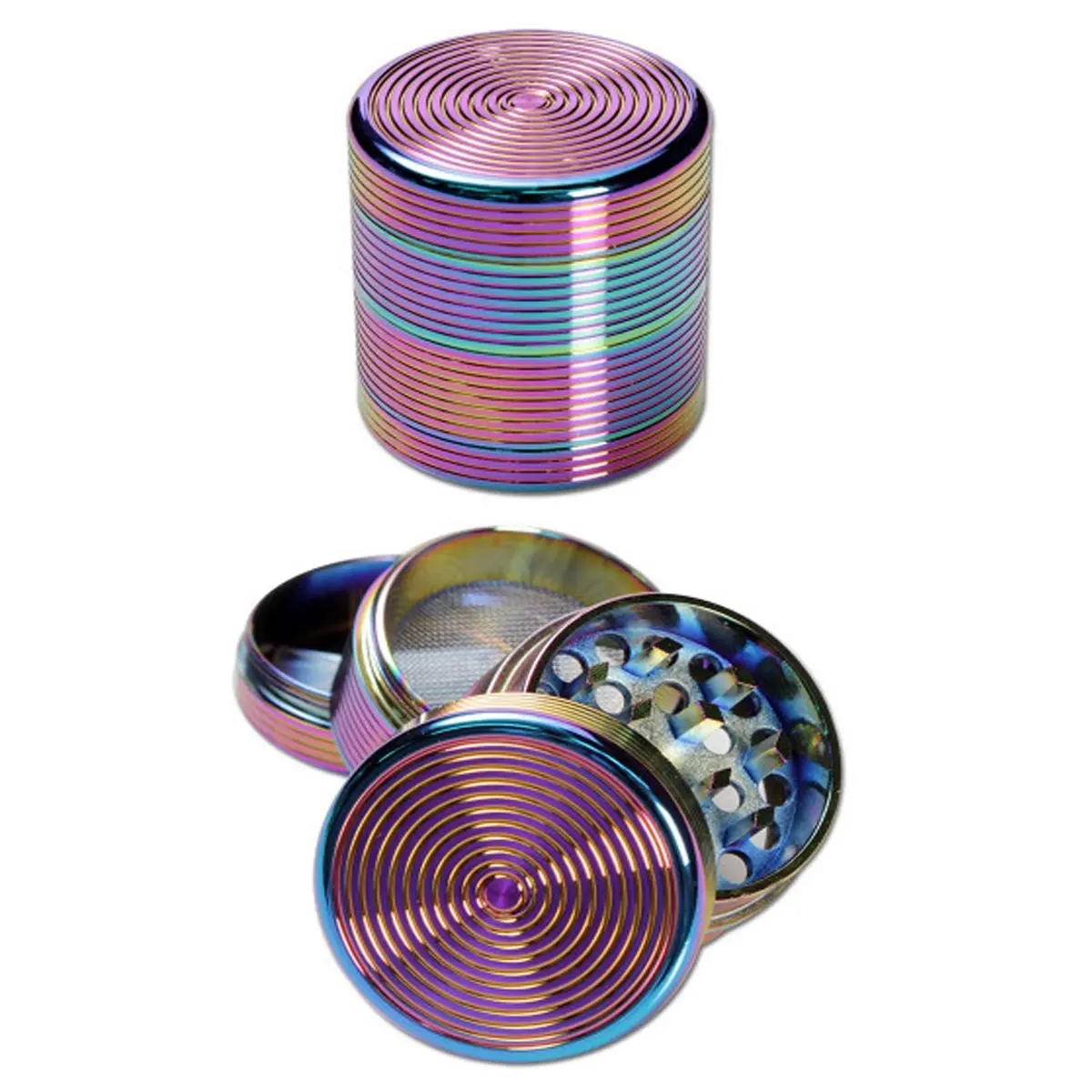
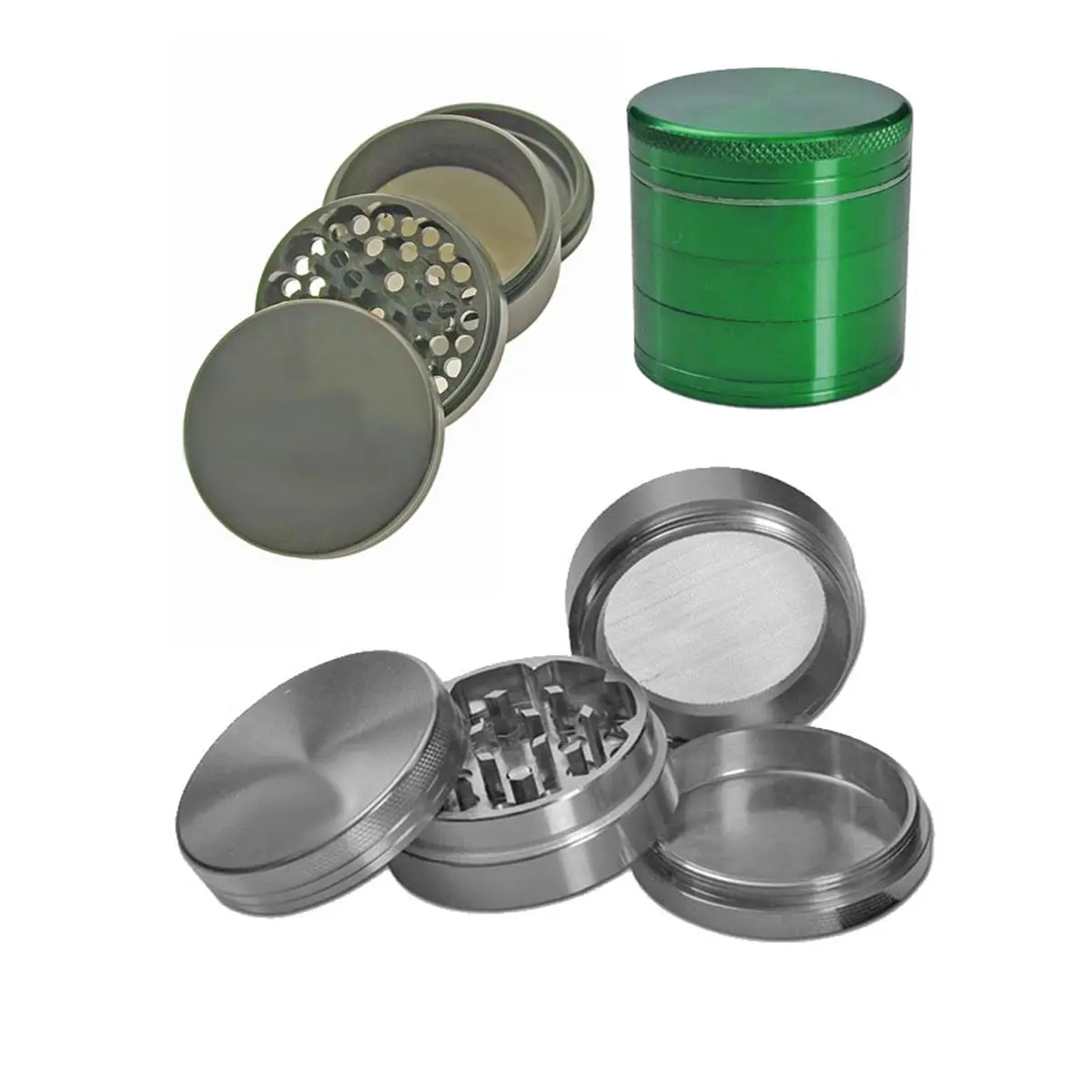
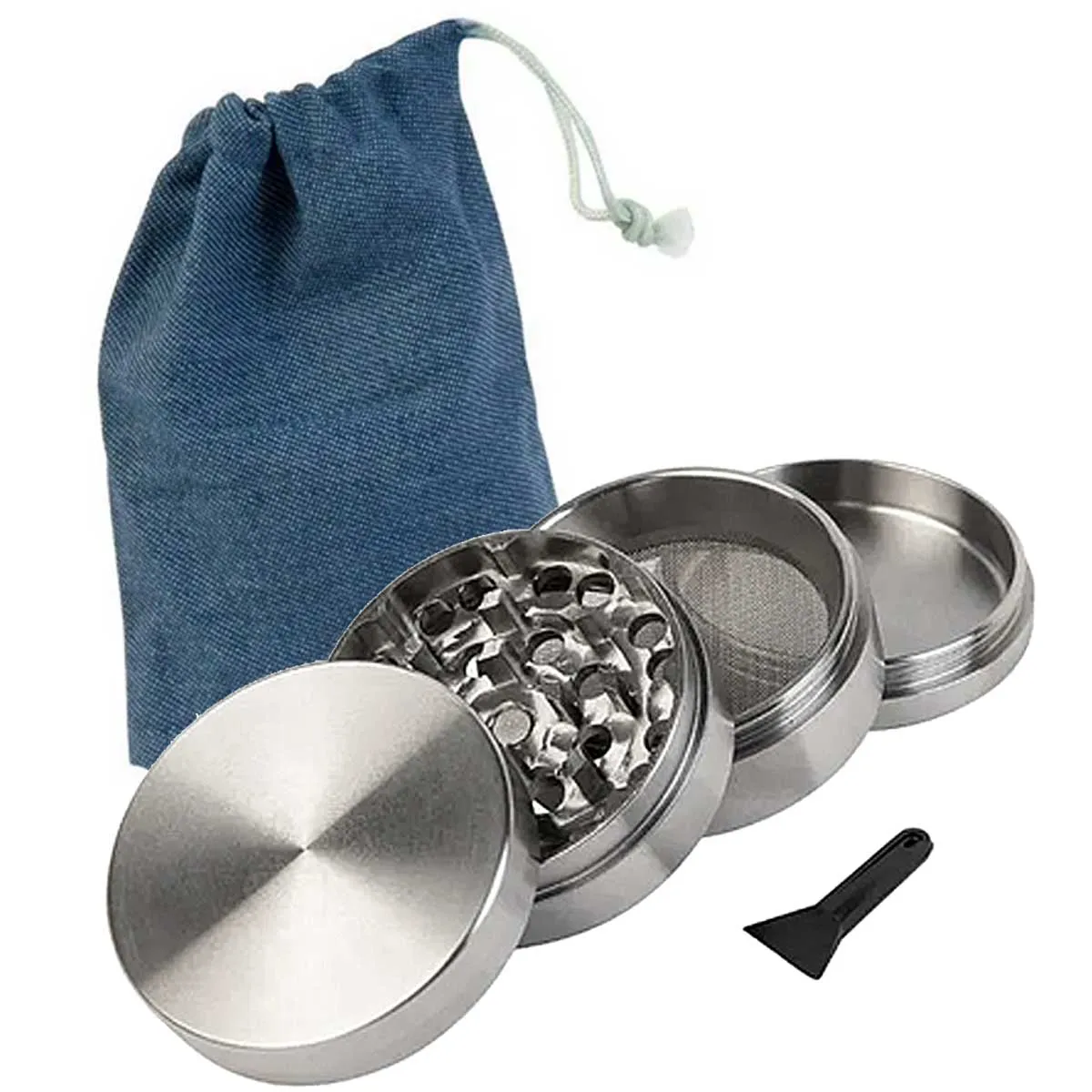
A look inside: how does a grinder work in detail?
Wondering how a grinder actually works? The magic lies in a simple but effective mechanism and the interplay of its parts. Let's take a closer look:
The basic principle: twist, grind, collect
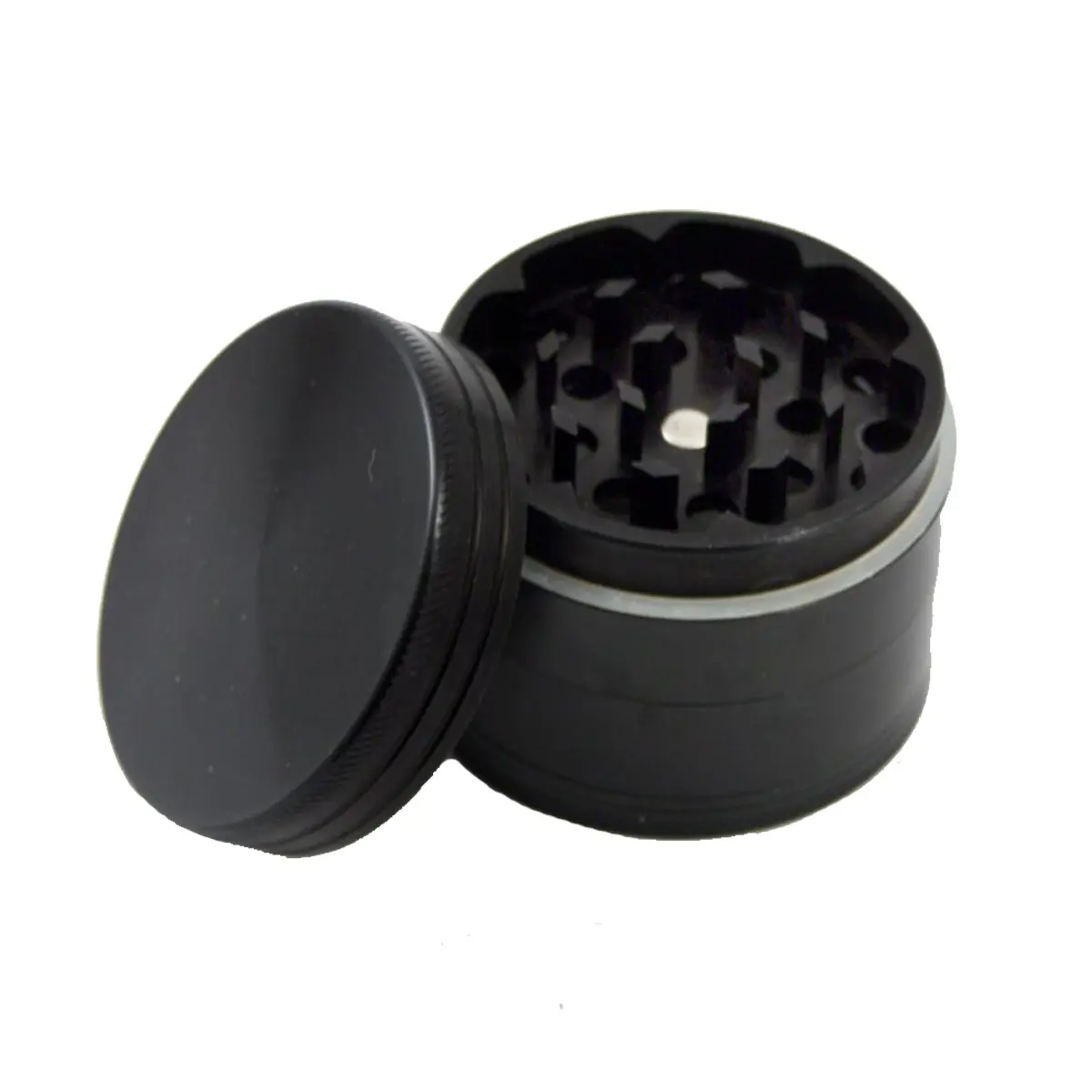
At its core it's simple: you place your herb between the two main parts of the grinder, which are studded with sharp "teeth" or pegs. Then you close the lid and twist the parts against each other. The teeth mesh and grind the plant material effectively. In multi-part grinders, the ground material falls through holes into a chamber below.
The parts and their mission: what does what?
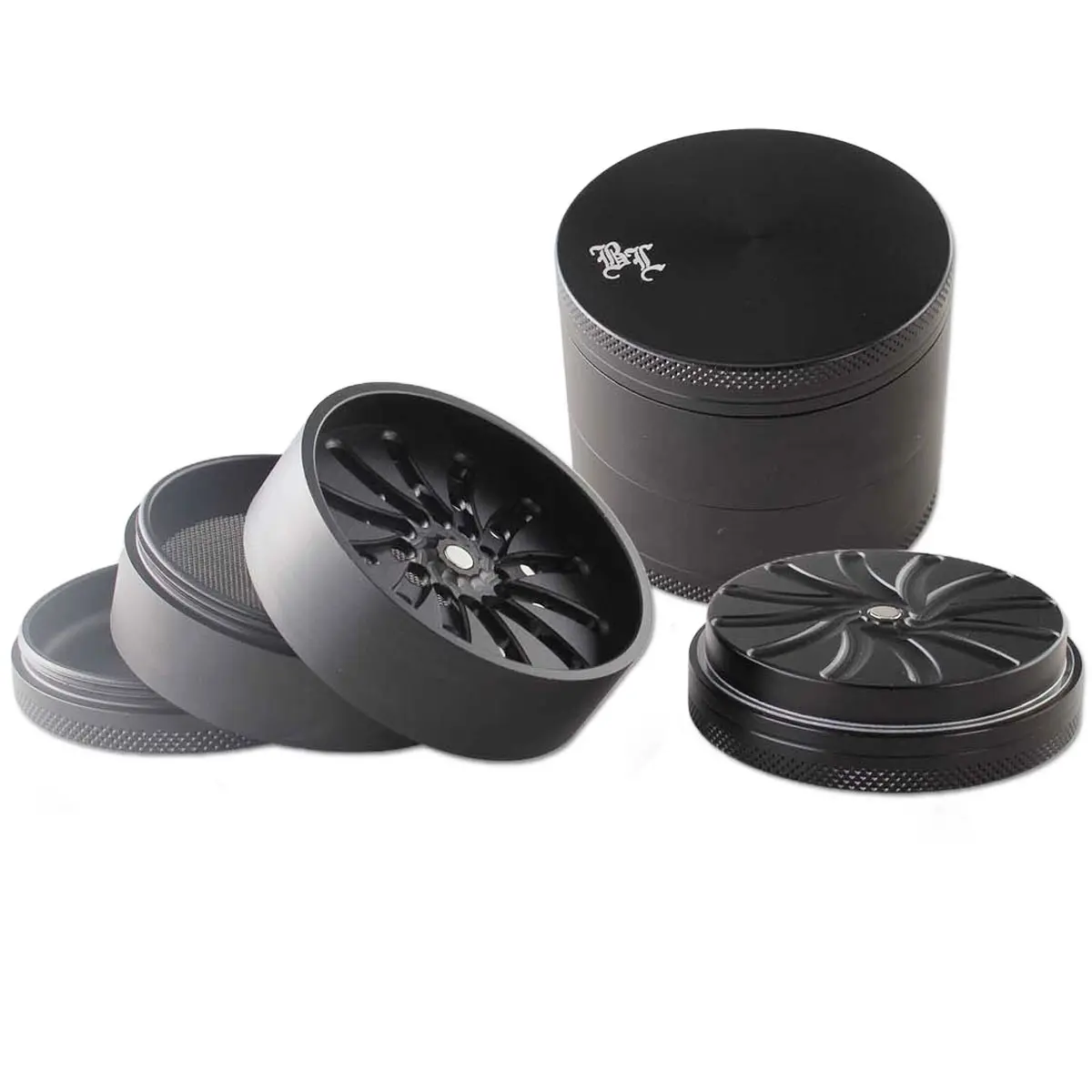
A typical grinder, especially the popular 4-piece models, is made up of several components, each with a specific job:
- Lid: the top part, often magnetic, closes the grinder and holds the first row of grinding teeth.
- Grinding teeth/blades: the heart of the grinder. These sharp elements (often diamond, blade or nail shaped) sit in the lid and in the grinding chamber below. They mesh as you twist and break down the herb. The shape of the teeth can affect how fine the grind turns out.
- Grinding chamber: the area where the actual shredding happens. The floor of this part has holes.
- Holes: sufficiently ground material falls through these openings into the next chamber. The size and number of holes help determine how fine or coarse the end result is.
- Collection chamber: this is where the finished ground herb ends up. You can take it straight from here.
- Screen (sieve/pollinator): a fine metal screen at the bottom of the collection chamber. It only lets the tiny trichomes (kief) fall through, while the coarser plant material is held back. Not every grinder has a screen!
- Kief catcher: the bottom chamber, right below the screen. This is where the valuable kief builds up over time.
2-piece vs. 4-piece: the functional difference explained
The main difference lies in the build and therefore the function:
- 2-piece grinders: just a lid and a grinding chamber. They shred the herb, which then has to be taken straight from the grinding chamber. Simple, compact, but with no kief collection.
- 4-piece grinders: additionally have a collection chamber with a screen and a kief catcher. The ground herb falls through the holes, is separated from the finest particles by the screen, which then collect in the kief catcher. More convenient and with added benefit.
(Quick note: there are also 3-piece models (no screen but with a collection chamber) and 5-piece models (e.g. with two screens or an extra storage compartment), but the principle stays similar.)
⚠️ Important: here we only explain the function. Which type suits you is covered in our buying a grinder guide.
The secret of the magnet: more than just a lid holder
Almost all grinders have a small magnet in the centre of the lid and the grinding chamber. It has two functions: it holds the lid securely shut so nothing falls out while grinding and the grinder doesn't open by accident. It also helps centre the two grinding parts. ⚠️ But careful: don't place herb directly on the magnet in the middle, as it can't be ground properly there and could block the grinding action!
Get to the herb: how to use your grinder properly (the basics)
Okay, now it gets practical! Using your grinder properly is no rocket science, but a few basics help you nail the perfect result. Here are the four core steps.
-
Step 1: preparation is key
Take your dried herb and give it a quick check. Remove coarse stems and any seeds, as these can spoil the grind and later the flavour. You can gently break up very large buds with your fingers first.
-
Step 2: fill loosely and correctly
Open the lid and lay the prepared pieces loosely on the teeth of the grinding chamber. ⚠️ Important: don't overfill the grinder! Too much material makes twisting harder and leads to an uneven grind. Also leave the centre above the magnet clear so everything can move freely.
-
Step 3: grind with feel
Put the lid back on. Hold the lower part steady and twist the lid. A few turns (often around 10-15) are usually enough. You'll feel the resistance ease off. Trust your feel and avoid force, if it jams hard, it's probably too full.
-
Step 4: take out the result
Open the grinder carefully. In the collection chamber you'll find your freshly ground herb, ready to use. On models with a screen (like many) it's worth a look below: over time the fine, potent powder builds up in the kief catcher.
Grind like a pro: avoid common mistakes & handy tips
Got the basics down? Great! With these extra tips you get even more out of your grinder and avoid common beginner mistakes:
💡 Tip 1: don't overfill your grinder!
We can't say it often enough: an overfilled grinder grinds poorly, jams easily and can even damage the teeth over time. Better to grind in two smaller batches than cram everything in at once.
💡 Tip 2: sticky situation? Here's how to handle it
Some herb is extremely resinous and can gum up the grinder. If it's already getting tough while grinding:
- ⚠️ Don't try to force the twist.
- Sometimes it helps to put the grinder with its contents in the freezer for 10-15 minutes. The resin turns brittle and is often easier to grind and later remove. (Proper cleaning, though, is another topic!)
- Make sure your herb is sufficiently dried.
💡 Tip 3: fine or coarse? Understanding the grind
The grind affects burning or vaporizing behaviour:
- Fine grind: ideal for vaporizers (more surface area for efficient vaporizing) and often preferred for joints too. Usually achieved by twisting longer or with grinders that have finer holes/teeth.
- Coarser grind: better for bongs or pipes, since fine powder could easily fall through the screen. Achieved by twisting for a shorter time.
Experiment a little to find the perfect consistency for your preferred method!
💡 Tip 4: the grinder's limits: what it's NOT for
A grinder is a specialist for dry herb. For the following it's unsuitable or can even be damaged:
- ❌ Hash or other extracts: too sticky, clogs the grinder instantly.
- ❌ Moonrocks: the mix of flower, oil and kief is too dense and sticky.
- ❌ Very moist plant material: also gums up the teeth and grinds poorly.
- ❌ Tobacco (especially shisha tobacco): often too moist and laced with molasses, which ruins the grinder.
Does it always have to be a grinder? A quick look at the alternatives
Of course there are other ways to break up herb:
- Your fingers: the classic, but imprecise, sticky, and some of the valuable trichomes stick to your hands.
- Scissors: better than fingers, but still fiddly, uneven and often too coarse or crushed.
- Knife & board: works, but it's laborious and not really practical day to day.
In a direct comparison it's clear: none of these methods comes close to the speed, cleanliness, consistency and efficiency of a good grinder. It's simply the superior tool for the job.
A clean grinder grinds best: care in brief
Even the best grinder needs a little love. Resin residue and plant fibres can build up over time, dull the teeth and make twisting harder. A clean grinder not only works better, it's also more hygienic and preserves the pure flavour of your herb.
💡 Stay clean! Regular care ensures a long life and optimal function for your grinder. How to get it spotless again depends on the material.
➡️ The best methods for every type: cleaning your grinder ➡️ For tough cases (metal only!): boiling your grinder, the ultimate guideFAQ: your most pressing grinder questions answered
Here are answers to a few questions we often get:
What is "kief" or "pollen"?
Kief (sometimes wrongly called pollen) are the tiny, crystal-like resin glands (trichomes) found on cannabis flower. They contain the highest concentration of cannabinoids and terpenes and are therefore especially potent. The screen in the grinder separates them from the rest of the plant material.
Is owning a grinder legal?
✅ Yes, owning a grinder itself is completely legal in most countries. Grinders are freely sold herb grinders. It only becomes relevant if residues of illegal substances are found in one. So always check the legal situation where you live. A clean grinder is no problem.
Does grinding make my herb more potent?
Not directly. The grinder adds no potency. But: the fine, even grind increases the surface area. That leads to more efficient burning or vaporizing, which means the active compounds are released and absorbed better. Many users therefore find the effect more intense or "better".
Which grind do I need for a joint, bong or vaporizer?
A rule of thumb:
- Vaporizer: usually a fine grind for maximum surface area and vapour.
- Joints/blunts: medium to fine is often ideal for a good burn and easy rolling.
- Bongs/pipes: rather medium to coarse, so nothing falls through the screen or chillum.
💡 Tip: best to test yourself what works for you and your device!
What does "grinder" mean in a drug context?
Because grinders are very often used to break up cannabis flower, the term often comes up in a cannabis context, which is subject to certain legal rules depending on the country. The grinder itself, however, is neutrally just a tool, a herb grinder. The key is to distinguish the tool from the material processed with it.
Conclusion: the grinder, your smart helper for more enjoyment
As you can see: a grinder is far more than a gimmick. It's an indispensable tool for anyone who cares about the best experience with their herb. From the perfect consistency to better flavour, a more efficient effect and clean handling, the benefits are obvious. It saves you time, spares your fingers and helps you get the maximum from your precious material.
💡 In short: a good grinder is a small investment that quickly pays off and lastingly improves your enjoyment.
➡️ Discover grinders now!