
Cannabis from Antiquity to the Modern Age: A Short History of Getting High
Weed Wissen
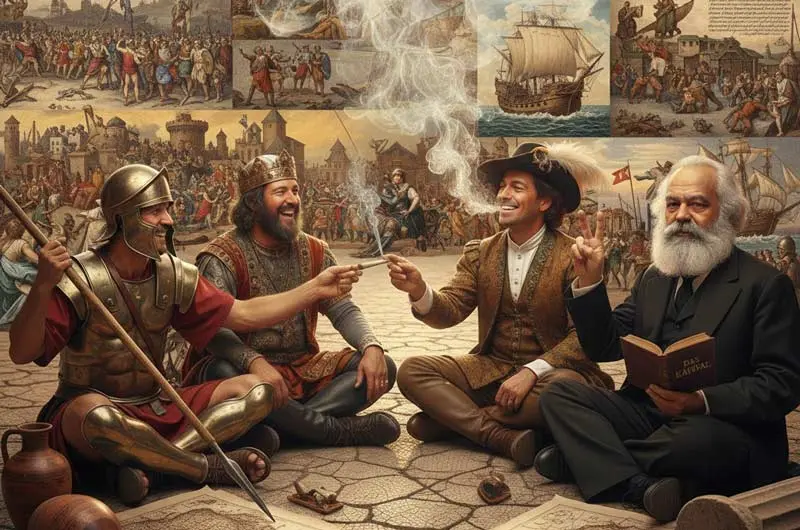
Cannabis is no modern phenomenon and no product of 20th-century counterculture. For thousands of years, hemp was part of medicine, ritual, religion and everyday culture. People used the plant to ease pain, expand consciousness or deepen spiritual experiences. Depending on the era and region, attitudes toward it swung between medical matter-of-factness and moral scepticism. A cross-epochal look reveals that dealing with cannabis was normalized for a long time; it only became problematized and politicized much later.
Antiquity: medicine, ritual and intoxication
In antiquity, cannabis was known above all as a healing and ritual plant, often embedded in a holistic understanding of body, mind and nature. In the 5th century BC, the Greek historian Herodotus described the hemp vapour baths of the Scythians, which he portrayed as ecstatic and purifying. Practices like these suggest that psychoactive use did not take place on the fringes but could be part of social and ritual acts. Physicians such as Dioscorides and Galen listed cannabis in their pharmacological works as an effective remedy against pain, inflammation and sleep disorders. What mattered was less a moral judgement than the question of dosage, effect and context, a pragmatic outlook typical of many ancient healing traditions.
Late antiquity and the early Middle Ages: knowledge transfer instead of prohibition
As political centres shifted, medical knowledge was not simply lost but continued to circulate through new networks. In the Arab-Islamic world in particular, the study of medicinal plants was collected, annotated and systematized, often on the basis of ancient sources but supplemented with fresh observations. The Persian physician Ibn Sina (Avicenna) described hemp preparations in his Canon of Medicine in nuanced terms and placed them within a broad understanding of symptoms and therapy. There, cannabis appeared not as a taboo but as an active substance to be used responsibly. It was precisely this sober attitude that kept such texts relevant for centuries, including for later European medicine.
The Middle Ages: an everyday plant with a darker side
In the European Middle Ages, hemp was above all an indispensable crop: for ropes, fabrics, sails and paper, and thus for infrastructure and trade. At the same time, parts of the Islamic world and North Africa saw widespread hashish use, judged very differently from one culture to the next. Chroniclers and scholars such as al-Maqrizi documented its use in cities like Cairo, including the social tensions, religious criticism and early attempts at regulation. These reports show that cannabis was not only consumed privately but was socially visible. The legends surrounding the Hashashin additionally mark how early cannabis was drawn into political narratives: as a screen onto which fear, control and hostile images were projected, regardless of how reliable individual claims actually were.
The early modern period: between alchemy and empiricism
With the Renaissance and humanism, the view of natural substances changed once again: observation, experience and practical effectiveness gained weight. Healers, apothecaries and physicians continued to work with plant-based drugs, often in the form of extracts, salves or tinctures, and cannabis remained part of this medical repertoire. Figures such as Paracelsus embody a transition: away from mere deference to authority and toward more experimental thinking and a stronger emphasis on dosage. Travel accounts also became more important, because they carried knowledge about plants and forms of use from other regions to Europe. Naturalists such as Engelbert Kaempfer described cannabis use in Asia and the Orient matter-of-factly and with ethnographic curiosity. This gave rise to an image of cannabis as a global cultural plant whose meaning shifted from region to region between medicine, pleasure and ritual.
The 19th century: cannabis as science and inspiration
In the 19th century, cannabis came strongly back into European focus through colonial medicine and scientific networks. William Brooke O'Shaughnessy made cannabis medicine known in the Western context by observing its effects, documenting them and describing therapeutic applications. Pharmacologists such as Louis Lewin placed cannabis within an emerging modern science of drugs and discussed its benefits, risks and typical effects with growing rigour. In parallel, a cultural cannabis scene arose in literary circles: hashish was perceived as a consciousness-altering experience and an object of intellectual reflection. Authors such as Fitz Hugh Ludlow and Charles Baudelaire described their experiences not only sensationally but also analytically, at times cautionary, at times fascinated. Cannabis thus became both a research subject and a cultural theme, a dual role that strongly shaped the 19th century.
The early 20th century: from research subject to taboo
As late as the 1920s and 1930s, cannabis experiments in certain circles were no scandal but part of self-observation, psychology and philosophical inquiry. Walter Benjamin, for instance, took part in hashish sessions that were often recorded and that examined perception, language and the sense of time. Such texts show that in the interwar years cannabis was discussed not only as intoxication but as a gateway to phenomena of consciousness. At the same time, the political framework shifted: international treaties, moral campaigns and national legislation shaped a new picture in which cannabis was increasingly seen as a threat to society. This changed not only the legal situation but also the cultural narrative about those who consumed it. Step by step, a plant with diverse, historically grown meanings became a symbol of deviance and control.



















Frühe Neuzeit – Zwischen Alchemie und Empirie
Mit Renaissance und Humanismus änderte sich der Blick auf Naturstoffe erneut: Beobachtung, Erfahrung und praktische Wirksamkeit gewannen an Gewicht. Heilkundler, Apotheker und Ärzte arbeiteten weiterhin mit pflanzlichen Drogen, oft in Form von Auszügen, Salben oder Tinkturen, und Cannabis blieb Teil dieses Arzneischatzes. Figuren wie Paracelsus stehen für einen Übergang: weg von bloßer Autoritätsgläubigkeit, hin zu experimentellerem Denken und einer stärkeren Betonung der Dosis. Auch Reiseberichte wurden wichtiger, weil sie Wissen über Pflanzen und Konsumformen aus anderen Regionen nach Europa trugen. Naturforscher wie Engelbert Kaempfer beschrieben den Cannabiskonsum in Asien und im Orient sachlich und mit ethnografischer Neugier. Dadurch entstand ein Bild von Cannabis als globaler Kulturpflanze, deren Bedeutung je nach Region zwischen Medizin, Genuss und Ritual wechselte.
19. Jahrhundert – Cannabis als Wissenschaft und Inspiration
Im 19. Jahrhundert gelangte Cannabis durch Kolonialmedizin und wissenschaftliche Netzwerke erneut stark in den europäischen Fokus. William Brooke O’Shaughnessy machte Cannabismedizin im westlichen Kontext bekannt, indem er Wirkungen beobachtete, dokumentierte und therapeutische Anwendungen beschrieb. Pharmakologen wie Louis Lewin ordneten Cannabis in eine entstehende moderne Drogenkunde ein und diskutierten Nutzen, Risiken und typische Effekte mit zunehmender Systematik. Parallel dazu entstand eine kulturelle Cannabisszene im literarischen Milieu: Haschisch wurde als bewusstseinsveränderndes Erlebnis und als Gegenstand intellektueller Reflexion wahrgenommen. Autoren wie Fitz Hugh Ludlow und Charles Baudelaire beschrieben Erfahrungen nicht nur sensationell, sondern auch analytisch, teils warnend, teils fasziniert. Damit wurde Cannabis zugleich Forschungsobjekt und Kulturthema – eine Doppelrolle, die das 19. Jahrhundert stark prägte.
Frühes 20. Jahrhundert – Vom Forschungsobjekt zum Tabu
Noch in den 1920er- und 1930er-Jahren waren Cannabisexperimente in bestimmten Kreisen kein Skandal, sondern Teil von Selbstbeobachtung, Psychologie und philosophischer Fragestellung. Walter Benjamin etwa nahm an Haschisch-Sitzungen teil, die oft protokolliert wurden und Wahrnehmung, Sprache und Zeitgefühl zum Thema machten. Solche Texte zeigen, dass Cannabis in der Zwischenkriegszeit nicht nur als Rausch, sondern als Zugang zu Bewusstseinsphänomenen diskutiert wurde. Gleichzeitig verschob sich der politische Rahmen: internationale Abkommen, moralische Kampagnen und nationale Gesetzgebung formten ein neues Bild, in dem Cannabis zunehmend als gesellschaftliche Bedrohung galt. Damit änderte sich nicht nur die Rechtslage, sondern auch die kulturelle Erzählung über Konsumierende. Aus einer Pflanze mit vielfältigen, historisch gewachsenen Bedeutungen wurde Schritt für Schritt ein Symbol für Abweichung und Kontrolle.